
When to Split Kitchen Remodel Estimates Into Two Separate Bids
Bundling demolition and reconstruction into one kitchen estimate locks your crew calendar, invites scope creep, and forces you to pad contingency when homeowners delay finish decisions.
- Published
- Reading time
- 14 min
- Topics
- kitchen remodelingpricing strategyestimatesproject management
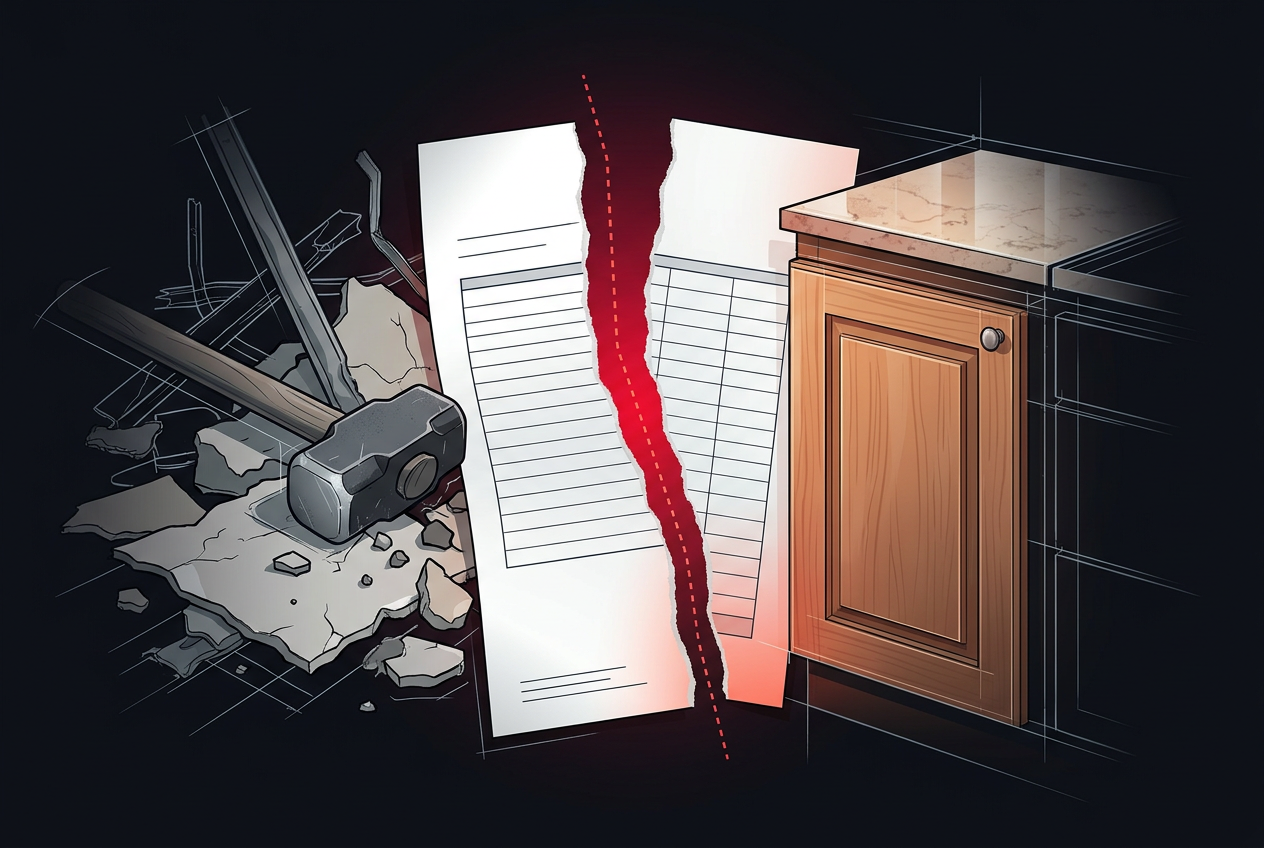
Most kitchen remodel estimates bundle demolition and reconstruction into a single price and a single timeline. The homeowner signs, you schedule the crew, and you assume the project moves in a straight line from tearout to cabinets to countertops to closeout. That assumption costs you margin, complicates your crew calendar, and opens the door to scope creep every time the homeowner needs "just a few more days" to decide on tile or source their own cabinets.
Splitting the estimate into two separate bids—one for demolition, one for reconstruction—protects your capacity and pricing when the homeowner is not ready to commit to finishes or wants to participate in procurement. It also separates a low-margin, commodity phase from the profitable rebuild work that requires your crew's skill and coordination.
The bundled estimate problem
A bundled kitchen estimate assumes the homeowner has made every material decision before you start demo. In practice, many homeowners sign the contract with placeholder allowances for cabinets, countertops, tile, and fixtures. They believe they will finalize those choices during the lead time before your crew arrives. Then the project starts, and reality sets in.
The cabinet lead time stretches from six weeks to ten. The homeowner changes their mind on the backsplash and needs to reorder tile. The plumber discovers the existing drain stack is not where the drawing shows it, and the island needs to move two feet. You have already demolished the kitchen. Your crew is scheduled for the full reconstruction starting Monday. The homeowner now needs three more weeks to confirm finishes and get the cabinets delivered.
You face three options, all of them bad. You can pull your crew off the job and backfill their calendar with other work, which may or may not exist and may not fit the available window. You can keep the crew on site doing prep work, electrical rough-in, and drywall repair, burning labor hours on tasks that do not move the project toward completion and compressing your margin. Or you can reschedule the entire reconstruction phase, which pushes other booked projects and leaves gaps in your calendar you cannot fill on short notice.
The bundled estimate also locks you into the original scope even when conditions change. If the homeowner decides mid-project to add a pantry cabinet, move a window, or upgrade the countertop material, you issue a change order. The homeowner perceives the change order as a surprise cost, even though the scope shifted. That perception damages trust and makes the final payment conversation harder.
When to split the bid
Split the estimate into demolition and reconstruction when any of these conditions apply.
The homeowner has not finalized finish selections. If the homeowner is still choosing cabinets, countertops, tile, or appliances when you provide the estimate, they are not ready for a bundled bid. They may believe they will finalize those decisions quickly, but cabinet lead times, supply delays, and second-guessing stretch the timeline. Quoting demolition separately lets you schedule and complete that phase without waiting for decisions that are outside your control.
The homeowner wants to source materials independently. Some homeowners prefer to purchase their own cabinets, countertops, or tile to capture perceived savings or access specific brands. When the homeowner controls procurement, you lose control over delivery timing, product quality, and coordination. A split estimate protects you from schedule delays caused by late or incorrect deliveries. You complete the demo, get paid, and re-engage when the homeowner has materials on site and is ready for installation.
The project includes structural unknowns that will affect finish decisions. Older homes often hide structural issues behind walls and under floors. Load-bearing walls that were not disclosed, outdated plumbing that needs replacement, or subfloor damage that requires repair can all shift the scope and budget. Completing demolition as a standalone phase exposes those issues, allows you to price the additional work accurately, and lets the homeowner adjust finish choices based on the revised budget before you start reconstruction.
You are booked out several weeks and cannot afford calendar uncertainty. If your crew calendar is tight and you have other projects queued, a homeowner's indecision on finishes creates a scheduling cascade. Splitting the estimate lets you book the demo phase in a near-term opening, complete it, and schedule the reconstruction phase only after the homeowner has confirmed materials and timing. You avoid holding crew capacity for a project that may not be ready to proceed.
The demolition phase is simple and the rebuild is complex. Demolition work is straightforward. Pull cabinets, disconnect plumbing and electrical, remove flooring, and haul debris. It requires less skill, less coordination, and less time than the reconstruction phase. When you bundle both phases into one estimate, the low-margin demo work dilutes the overall project margin. Pricing demo separately at a lower rate reflects the work's commodity nature and reserves your premium pricing for the skilled reconstruction labor.
How to structure the two bids
The demolition estimate should cover tearout, disconnection, debris removal, and any basic preparation required before reconstruction. Include specific line items for cabinet removal, countertop removal, appliance disconnection, flooring removal, drywall or plaster removal if required, and haul-away. Specify what you will protect, what you will leave exposed, and what temporary measures you will take to secure the space if the reconstruction phase does not start immediately. Include a cleanup and broom-sweep at the end of the demo phase.
Price demolition as a fixed bid or a time-and-materials estimate with a not-to-exceed cap. Demolition work is unpredictable because of hidden conditions, but the scope is limited. A cap protects the homeowner from runaway costs and protects you from underpricing if the tearout reveals complications.
The reconstruction estimate should cover framing, rough-in plumbing and electrical, drywall or plaster repair, finish carpentry, cabinet installation, countertop templating and installation, tile work, fixture installation, trim, and paint. Break the estimate into phases or categories so the homeowner understands the sequence and cost of each component. Include allowances only for items the homeowner has not yet selected, and specify the allowance amount, the selection deadline, and the change-order process if the actual cost exceeds the allowance.
Specify material lead times and the conditions required before you schedule the reconstruction start date. For example, require that cabinets, countertops, and tile are on site or confirmed for delivery within a specific window before you book the crew. This prevents the homeowner from assuming you will start reconstruction before materials arrive and eliminates the risk that you commit crew capacity to a project that is not ready.
Pricing and margin considerations
Demolition work carries lower gross margin than reconstruction. Labor is less specialized, the work moves quickly, and homeowners comparison-shop demo pricing aggressively. Typical demo labor runs between $40 and $75 per hour depending on your market, and the total phase cost for a standard kitchen demo ranges from $1,500 to $4,000 including haul-away. Gross margin on demo work often sits between 20 and 35 percent after labor, disposal, and overhead.
Reconstruction work commands higher margin because it requires skilled labor, coordination across multiple trades, and accountability for the final result. Cabinet installation, tile work, and finish carpentry justify premium pricing. Gross margin on the reconstruction phase should target 40 to 55 percent depending on project complexity and your market position.
When you bundle both phases into one estimate, the blended margin falls somewhere in the middle. You obscure the low-margin demo work inside the total price, but you also dilute the high-margin rebuild work. Worse, if the homeowner delays the reconstruction phase or cancels it entirely after demo, you have already discounted the demo work to make the bundled price competitive. You lose margin on the only phase you completed.
Splitting the estimate lets you price each phase at its true market rate and margin. You charge a straightforward, competitive rate for demo work that reflects its commodity nature. You charge a premium rate for reconstruction work that reflects the skill, coordination, and risk involved. If the homeowner completes only the demo phase, you still capture appropriate margin on that work. If they proceed with reconstruction, you protect margin on the more profitable phase.
Managing homeowner expectations
Homeowners expect a single price for the full kitchen remodel because that is how most contractors present estimates. When you propose two separate bids, you need to explain the mechanics and the benefit clearly.
Position the split estimate as a way to protect the homeowner from paying for work you cannot complete on schedule. Explain that if finishes are not finalized or materials are not available, a bundled estimate forces you to either hold the project open and delay their kitchen completion or issue change orders that increase the total cost. A split estimate lets them move forward with demo immediately, finalize their finish decisions without time pressure, and then proceed with reconstruction when everything is ready.
Explain that the split estimate also reduces change-order risk. After demo is complete, you can walk the homeowner through the exposed space, identify any structural or systems issues, and adjust the reconstruction scope and price before work begins. They avoid surprise costs mid-project, and you avoid the perception that you are adding charges after they have committed.
Clarify the payment structure. Typically, you collect a deposit for the demo phase, a progress payment at demo completion, a deposit for the reconstruction phase once they are ready to proceed, and progress payments tied to reconstruction milestones. The homeowner pays for each phase as it is completed, which aligns payment with value delivered and reduces their financial risk if they decide not to proceed with reconstruction immediately.
Set a clear timeline for the homeowner to decide on finishes and schedule the reconstruction phase. For example, specify that the reconstruction estimate is valid for 60 days after demo completion, and that crew availability depends on their decision timeline. This prevents the project from sitting in limbo and gives you the flexibility to book other work if the homeowner is not ready to move forward.
Scheduling and capacity protection
A bundled kitchen estimate assumes continuous crew availability from demo through final punch. In reality, finish delays and material lead times create gaps that disrupt your crew calendar. You either absorb unproductive downtime or scramble to backfill the schedule with smaller projects that may not fit the available window.
Splitting the estimate separates the demo phase, which you can schedule in a one- to three-day window, from the reconstruction phase, which may span three to six weeks depending on scope. You book the demo phase when you have a short opening, complete it, and move your crew to the next project. When the homeowner confirms finishes and materials, you schedule the reconstruction phase in the next available multi-week window that matches the project duration.
This approach smooths crew utilization and reduces the risk of calendar gaps. You avoid holding multi-week blocks for projects that may not be ready to proceed. You also avoid the costly decision between pulling your crew off a delayed project and leaving them on site doing low-value prep work while the homeowner makes decisions.
If you operate with a small crew or subcontract trades, the capacity benefit is even more pronounced. You can schedule demo work with general labor or a smaller crew, then bring in specialized trades—plumbers, electricians, tile setters, cabinet installers—only when the reconstruction phase is confirmed and materials are staged. You reduce the coordination burden and avoid paying skilled trades to wait for the homeowner.
Change orders and scope creep
Bundled estimates invite scope creep because the homeowner perceives the signed contract as covering "the kitchen remodel" rather than a specific, itemized scope. When they request changes—adding a cabinet, moving a light fixture, upgrading tile—they view those requests as refinements within the original scope rather than additions that require a change order.
Splitting the estimate creates a natural breakpoint that resets expectations. After demo, you walk the homeowner through the exposed space, discuss any discoveries, and finalize the reconstruction scope. The reconstruction estimate reflects the agreed scope based on current conditions and confirmed finish selections. Changes after that point are clearly outside the agreed scope and trigger change orders that the homeowner expects and understands.
The split also protects you when the homeowner changes direction entirely. If they complete demo and then decide to scale back the reconstruction scope, source cabinets from a different supplier, or delay the project for several months, you have already been paid for the demo work at an appropriate margin. You are not locked into a bundled contract that assumes a scope the homeowner no longer wants. You can re-quote the reconstruction phase based on the new direction without negotiating a partial refund or writing off sunk costs.
When to bundle the estimate
Not every kitchen remodel estimate should be split. Bundle demolition and reconstruction into a single estimate when the homeowner has finalized all finish selections, confirmed material lead times, and is ready to start the project within your standard lead time. If cabinets, countertops, tile, and fixtures are selected, ordered, and scheduled for delivery before your crew starts demo, there is no scheduling risk and no reason to complicate the estimate with two separate bids.
Also bundle when the kitchen remodel is small and straightforward—replacing cabinets and countertops without structural changes, major appliance moves, or finish complexity. Simple projects move quickly, carry less scope risk, and do not create calendar uncertainty. A single estimate reflects the straightforward nature of the work and simplifies the homeowner's decision.
Bundle when you have sufficient crew capacity to absorb minor delays without disrupting other projects. If your calendar has flexibility and you can afford to keep a crew on site for a few extra days while the homeowner finalizes a finish detail, the risk of bundling is lower. The trade-off between a simpler estimate and a small schedule buffer may favor a single bid.
Practical example
A homeowner contacts you about a full kitchen remodel in a 1970s home. They want new cabinets, quartz countertops, subway tile backsplash, luxury vinyl plank flooring, updated lighting, and new appliances. They have toured showrooms and collected product brochures, but they have not finalized cabinet specifications or ordered materials. They want to move forward quickly because they are hosting family in three months.
You could provide a single estimate for the full project with allowances for cabinets, countertops, and tile. The homeowner signs, you schedule the crew, and you start demo in two weeks. During demo, you discover the existing soffit is not structural and can be removed, which the homeowner loves but which requires additional framing and drywall work. The cabinet delivery date slips by three weeks because the homeowner changed the door style after ordering. The countertop fabricator cannot template until cabinets are installed, which adds another week. Your crew completes the rough-in work, then sits idle for a week waiting for cabinets. You reschedule other projects to keep the crew on site, which creates gaps in your calendar. The project finishes five weeks late, your gross margin drops from 50 percent to 32 percent, and the homeowner is frustrated by the delays even though they caused most of them.
Alternatively, you provide two estimates. The first covers demolition, soffit removal, debris haul-away, and basic prep for reconstruction. The price is $3,200, the timeline is three days, and payment is due at completion. The second estimate covers framing, rough-in plumbing and electrical, drywall, cabinet installation, countertop templating and installation, tile backsplash, flooring, fixture installation, trim, and paint. The price is $48,000, and the start date is contingent on confirmed cabinet delivery and material staging. You specify that the homeowner must finalize all finish selections within 30 days of demo completion to maintain the quoted price and your crew availability.
The homeowner signs the demo estimate. You schedule and complete the demo phase in three days, discover the soffit can be removed, and walk the homeowner through the space. You adjust the reconstruction estimate to include soffit removal and updated framing. The homeowner finalizes cabinet selections and places the order. The cabinets arrive six weeks later. You schedule the reconstruction phase in the next available four-week window, complete the project on schedule, and achieve 52 percent gross margin on the reconstruction phase. The homeowner is satisfied because they understood the timeline, avoided change-order surprises, and received the kitchen they wanted without friction.
Connecting scope to capacity
Splitting kitchen remodel estimates into demolition and reconstruction bids is a capacity management tool as much as a pricing strategy. It separates a short, commodity phase from a long, skilled phase and gives you control over when and how you commit your crew calendar. It protects margin by pricing each phase at its true market rate. It reduces scope creep by resetting expectations after demo and before reconstruction. And it aligns payment with delivered value, which reduces financial risk for both you and the homeowner.
Homeowners who are ready to proceed with a complete kitchen remodel—finishes selected, materials ordered, timeline confirmed—benefit from a single bundled estimate that simplifies the decision and reflects the straightforward nature of the project. Homeowners who need time to finalize finishes, want to source materials independently, or face structural unknowns benefit from a split estimate that lets them move forward with demo, make informed decisions after exposure, and commit to reconstruction only when they are ready.
Your job is to assess which approach fits the project and the homeowner's readiness, then structure the estimate to protect your capacity, your margin, and your ability to deliver the finished kitchen on schedule. When you split the estimate correctly, you turn the homeowner's indecision from a scheduling problem into a managed process that keeps your crew productive and your calendar predictable. That discipline translates directly into more qualified estimates for the right projects, better use of crew capacity, and fewer change orders that erode margin and complicate closeout.