
Present the Safety Problem Before the Price
Electrical contractors who lead with price on panel upgrades and rewires lose qualified jobs because homeowners haven't internalized the urgency of the safety issue yet.
- Published
- Reading time
- 14 min
- Topics
- electricalestimatingsales process
Most electrical contractors lose qualified panel upgrades and whole-home rewire projects in the first ninety seconds of the estimate presentation. They walk into the homeowner's kitchen, sit down at the table, slide a one-page proposal across, and watch the conversation die when the number hits.
The problem is not the price. The problem is sequence. When you present a dollar figure before the homeowner understands the severity and immediacy of what you found in their panel or walls, you are asking them to evaluate cost in a vacuum. They have no framework for urgency, no visceral understanding of risk, and no capacity context for why waiting six months will limit their options. The default response is "I need to think about it," followed by weeks of radio silence while the service panel continues to fail and your crew sits between jobs.
Electrical contractors who close a higher percentage of panel upgrades and rewire estimates do not use different pricing. They use a different presentation structure. They build the problem before they introduce the solution, and they tie safety findings to immediate decisions. The result is shorter sales cycles, better project margins, and predictable crew schedules.
Why Price-First Fails
The typical electrical estimate presentation follows this sequence: greeting, small talk, hand over the written proposal, wait while the homeowner reads the total, then attempt to justify the number. This approach assumes the homeowner already believes the work is necessary and urgent. In most cases, they do not.
Panel upgrades and whole-home rewires are not impulse purchases. The homeowner called you because their breaker keeps tripping, they want to add a car charger, or they are planning a kitchen renovation and the general contractor told them the panel needs work. They know something is wrong, but they have not connected that surface problem to the underlying safety or capacity issue. They certainly have not internalized that the 100-amp panel with aluminum feeders and a mix of tandem breakers represents a fire risk or that their 1960s knob-and-tube wiring will prevent them from insulating the attic.
When you lead with price, the homeowner's first emotional response is sticker shock. A panel upgrade runs between $2,500 and $6,000 depending on amperage, service mast work, and permit requirements. A whole-home rewire can hit $15,000 to $35,000 for a 2,000-square-foot house. These are not small numbers, and without context, they feel arbitrary and negotiable.
The homeowner has no reference point. They do not know what a service panel costs, what a permit involves, or why you cannot just swap the breaker. All they see is a number that is larger than they expected, attached to a problem they do not fully understand. Their instinct is to delay, get a second opinion, or ask whether they can "just do part of it now."
Price-first presentations also eliminate your ability to frame options strategically. If the homeowner's first exposure to scope is a single number on a page, you have no room to show them what good-better-best looks like or to separate code-minimum work from capacity planning. You end up defending the price instead of designing the project.
Safety Findings First
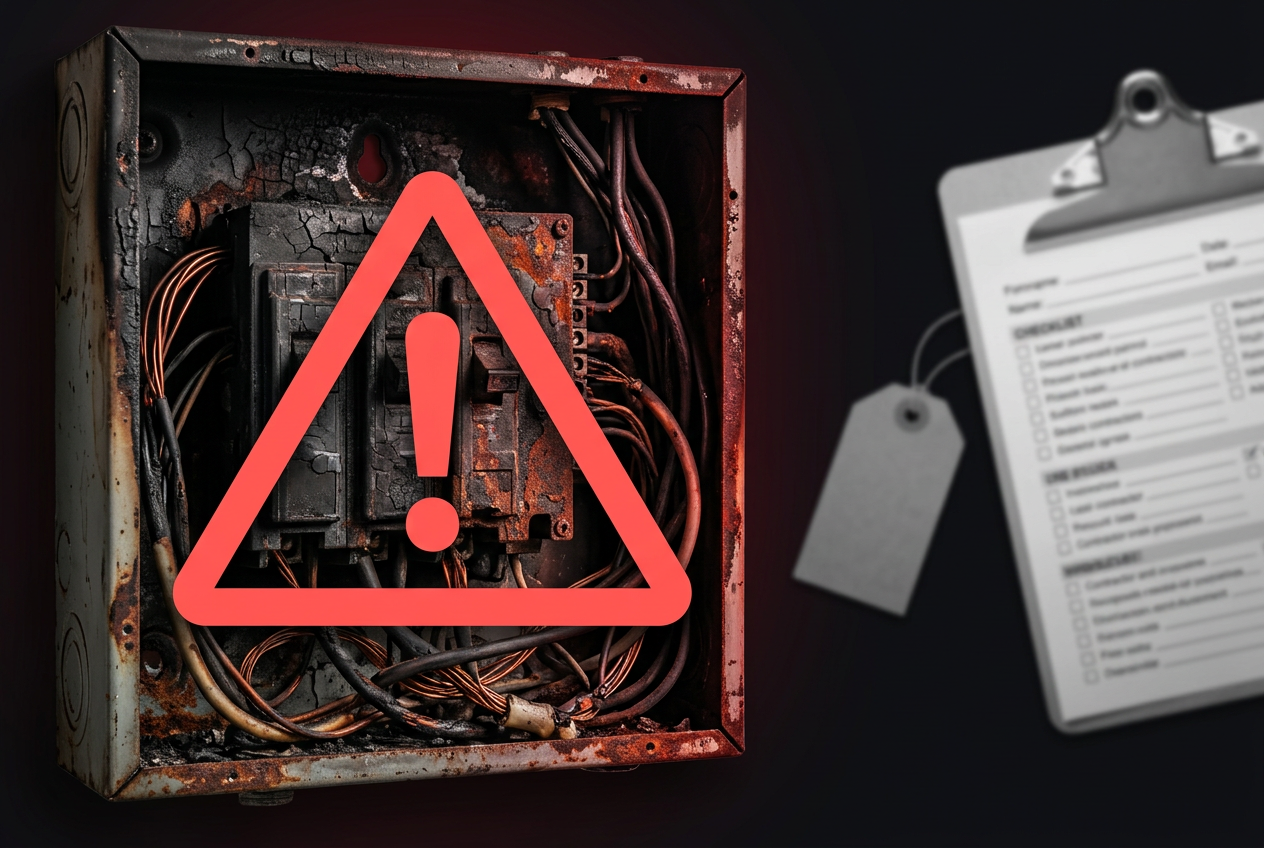
A better structure starts with a recap of what you found during the site visit. Sit down with the homeowner, pull out your phone or tablet, and walk through the photos you took of the panel interior, the service mast, the subpanel, the knob-and-tube splices, the ungrounded outlets, or the overloaded neutral bar. Explain what each issue means in plain language.
"Your main panel is a 100-amp Federal Pacific. The bus bar has corrosion, and three of the breakers are double-tapped. Federal Pacific panels were pulled from the market because the breakers fail to trip under fault conditions. That means if you have a short, the breaker may not stop the current, and the wire will heat up inside the wall. This is a fire risk, not a code preference."
The goal is not to scare the homeowner into a decision. The goal is to make the invisible visible. Most homeowners have never looked inside their panel. They do not know what a double-tap is, what a main breaker does, or why aluminium wiring matters. Your job in the first five minutes of the estimate presentation is to translate what you observed into consequences they can understand.
Use specific examples tied to their home. If they told you during the initial call that they want to add a Level 2 EV charger, explain that their current panel has no available slots and no capacity for a 40-amp circuit. If they are planning a kitchen remodel, explain that the existing 60-amp subpanel feeding the kitchen cannot support the induction range, wall oven, and dishwasher they want to install. If you found knob-and-tube wiring in the attic, explain that insulation contractors will refuse to blow cellulose over active knob-and-tube because of heat buildup and fire risk.
This is not a sales tactic. This is technical education delivered in the context of the homeowner's actual situation. You are not inventing urgency. You are surfacing the urgency that already exists and connecting it to the project they want to complete.
Code vs. Capacity
One of the most common mistakes in an electrical estimate presentation is treating all panel upgrades as interchangeable. A homeowner who needs a panel upgrade to pass inspection after a kitchen gut is in a different position than a homeowner who wants to add solar and a battery backup. The first is a code-driven project with a binary outcome. The second is a capacity-planning project with multiple design options.
Your presentation structure should reflect that difference. For code-driven work, present a single scope that solves the compliance issue and explains why phasing or partial work will not satisfy the inspector. For capacity-driven work, present tiered options that show the homeowner what they get at each investment level.
A tiered electrical estimate for a panel upgrade might look like this:
Option A: Code minimum. Replace the 100-amp panel with a 200-amp panel, update the grounding system to current code, pull permits, and schedule inspections. This solves the safety issue and gives you room for the EV charger. It does not add circuits to the garage or attic, and it does not include a whole-house surge protector.
Option B: Planned capacity. Everything in Option A, plus a 100-amp subpanel in the garage with four circuits for future workshop equipment and EV charging, and a dedicated 20-amp circuit to the attic for future mini-split installation. This builds in headroom for the projects you mentioned in the next two years.
Option C: Full future-proof. Everything in Option B, plus a service upgrade to 320 amps with a dual-feed meter base to support solar and battery backup, whole-house surge protection, and conduit runs to the roof and exterior wall for future solar installation. This is the last time you will need to touch the service for the life of the home.
Each option solves the immediate problem. The differences are in future capacity, convenience, and total project cost. Presenting three options lets the homeowner choose their investment level instead of negotiating your price down. It also positions you as a planner, not a vendor.
When the project is driven by an active safety issue—failed panel, exposed wiring, ungrounded circuits in a bathroom remodel—you do not present options. You present the scope required to make the home safe and compliant, and you explain the timeline and consequences of delay. This is not high-pressure sales. It is professional responsibility.
Handling "I Need to Think About It"
The most difficult moment in any estimate presentation is the objection that sounds like a delay but is actually a no. "I need to think about it" usually means one of three things: the homeowner does not believe the problem is urgent, they do not trust your diagnosis, or they cannot afford the work right now and are embarrassed to say so.
Your response depends on which category you are in. If you presented safety findings first and the homeowner still wants to delay, ask a clarifying question.
"I understand. Can I ask what part you want to think over—whether the panel needs to be replaced, the scope of the work, or the timing?"
This question separates real objections from reflex delays. If the homeowner says they want to get a second opinion on whether the panel is actually unsafe, you have a trust problem. Offer to send them the photos, the panel model documentation, and a link to the CPSC recall notice if applicable. If the homeowner says they are not sure whether to do the garage subpanel now or later, you have a scope question. Walk back through the options and clarify what happens if they add the subpanel in a year versus now.
If the homeowner says they need to check their budget or talk to their spouse, you have a financing or priority conversation. This is where you acknowledge the cost and reframe the decision.
"I get it. This is not a small project. The reason I walked through the panel condition first is that this is not optional work you can push to next year. If the breaker fails to trip during a fault, you are looking at a fire inside the wall. If that happens, the insurance adjuster is going to pull the panel and see the double-taps and corrosion, and they are going to deny the claim because you had knowledge of the hazard. I am not trying to pressure you, but I do need you to understand the risk you are taking if you wait."
This is not a scare tactic. It is a factual summary of the consequences. If the homeowner has an active code or safety issue and chooses to delay, document that conversation in your follow-up email. Describe what you found, what you recommended, and what the homeowner decided. This protects you if the problem escalates and it creates a written record the homeowner can refer back to when they are ready to move forward.
Time Gap Between Visit and Presentation
The other variable that affects close rates is the time gap between your site visit and the estimate delivery. The longer you wait, the colder the lead becomes. The homeowner talks to other contractors, gets distracted by other projects, or convinces themselves the problem is not urgent.
For service panel upgrades and rewires, the optimal window is 24 to 72 hours. Any faster and you risk looking like you did not do the engineering work. Any slower and you risk losing mindshare.
This does not mean you need to hand-deliver every estimate in person. It means you need a structured process for estimate creation, internal review, and scheduling the follow-up meeting. If you are a one-person operation running service calls during the day, block two hours every evening to write estimates and send booking links for presentation meetings. If you have an office team, assign estimate responsibility to a specific person and set a turnaround standard.
Some electrical contractors email the estimate as a PDF and follow up with a phone call. This works for small projects—outlet additions, ceiling fan installs, panel repairs—but it fails for high-ticket projects where the homeowner needs to see your face and ask questions. Panel upgrades and whole-home rewires require a live presentation, whether that is in person at the kitchen table, over a video call, or during a follow-up site visit.
The presentation meeting should happen on the homeowner's timeline, not yours. When you finish the site visit, ask when they want to sit down and review the findings and options. Offer two or three windows in the next two to four days. Confirm the meeting by text the day before. Treat the estimate presentation as a booked appointment with the same weight as the site visit.
Single Scope vs. Options
Whether to present a single recommended scope or multiple options depends on the project driver. If the homeowner called because their electrician told them during a bathroom remodel that the panel needs to be replaced to pass inspection, they do not need three options. They need a clear scope, a timeline, and a price that reflects the work required to satisfy the code and the inspector.
If the homeowner called because they want to add solar, a battery, an EV charger, and a pool heater over the next three years, they need options that show them how to stage the work or build capacity now to avoid rework later.
The mistake is presenting options when the homeowner needs certainty or presenting a single scope when the homeowner wants control. Read the situation during the site visit. Ask what else they are planning. Ask whether they want to solve the immediate problem or build in future capacity. Tailor the estimate structure to the answer.
Proposal Format
The written proposal is a reference document, not the presentation. The homeowner should never see the price before you have walked through the findings, explained the scope, and answered their questions. This means you do not email the proposal in advance. You bring it to the meeting, and you control when it comes out.
Start the meeting with the safety findings and photos. Move to the scope and options. Answer questions. Then introduce the written proposal as a summary of what you just discussed. Walk through each line item, explain what is included, and clarify what is not included. Show the timeline, the payment schedule, and the permit process.
The proposal should include photos of the existing conditions, a description of the work in plain language, and a breakdown of the scope by phase if the project involves multiple areas. It should not include a page of boilerplate disclaimers, a lengthy warranty section, or a sales pitch. The proposal is a contract preview, not a brochure.
For panel upgrades, include the panel make and model, the amperage, the number of circuits, the grounding and bonding work, the service mast or meter base replacement if required, and the permit and inspection fees. For whole-home rewires, include the areas being rewired, the number of outlets and switches, the fixture allowances, the access method—whether you are opening walls or fishing—and the drywall and paint responsibility.
Clarity prevents disputes. If the homeowner is responsible for drywall repair after a rewire, state that in the proposal and explain it during the presentation. If the price assumes crawl space access and you find during demo that the crawl space is flooded, the change order conversation is easier because the original scope was explicit.
Converting Estimates to Signed Contracts
The estimate presentation does not end when you hand over the proposal. It ends when the homeowner makes a decision. Your job is to guide that decision by removing uncertainty and creating a clear next step.
At the end of the presentation, ask a closing question. "Based on what we have talked through, do you want to move forward with Option B, or do you need time to review?"
If the homeowner says yes, pull out the contract and walk through the signature and deposit process. If they say they need to talk it over, confirm the timeline. "I understand. When do you think you will have an answer? I ask because I have crew availability the week of the 18th, and if we get the contract signed by Friday, I can lock that in. After that, I am looking at mid-November."
This is not pressure. It is logistics. Panel upgrades and rewires require permits, inspection scheduling, and material lead times. The homeowner needs to understand that delay has consequences for their timeline, not just yours.
Follow up the same day with an email summarizing the meeting, attaching the proposal, and restating the next step. If the homeowner asked a question you did not have an answer for—whether their HOA requires architectural approval for a service mast change, whether their utility offers a rebate for panel upgrades—research it and include the answer in the follow-up email.
Most electrical contractors stop following up after the first email. They assume the homeowner will call when ready. This works for homeowners who have already decided. It fails for homeowners who are comparing bids, waiting for a tax refund, or dealing with a family emergency. A structured follow-up sequence—email at day one, text at day four, call at day seven—keeps you in front of the homeowner without being pushy.
Why This Matters for Crew Utilization
Estimate close rate and sales cycle length are not vanity metrics. They determine whether your crew is working on booked jobs or sitting between projects while you chase new leads. If you present ten panel upgrade estimates per month and close three, you need to generate and qualify thirty leads to keep a two-person crew busy. If you close six of those ten estimates by improving your presentation structure, you cut lead generation effort in half and increase revenue per lead.
Faster sales cycles also improve cash flow predictability. A homeowner who signs the contract three days after the estimate presentation schedules the job within two weeks. A homeowner who takes three weeks to decide pushes the job into the next month or the next season, which creates gaps in your schedule and forces you to fill short-notice openings with lower-margin service calls.
The electrical contractors who run the tightest operations are not the ones with the cheapest prices or the flashiest trucks. They are the ones who convert qualified opportunities into booked estimates at a high rate and move from estimate to signed contract in under a week. That efficiency comes from a structured presentation process that builds urgency, presents options, and removes decision friction.
The Outcome
Panel upgrades and whole-home rewires are high-value projects that solve real safety and capacity problems for homeowners. When you structure the estimate presentation to lead with findings instead of price, you give the homeowner the context they need to make an informed decision quickly. You reduce objections, shorten the sales cycle, and increase the percentage of estimates that turn into signed contracts.
The presentation is not a sales pitch. It is technical education delivered in a sequence that matches how homeowners process risk and evaluate investment. Safety findings first, scope and options second, price third. That order turns qualified inquiries into booked jobs and keeps your crew moving from one project to the next without gaps.